Monday, February 18, 2013

Transportation Slam

All the posts you've read in the past six weeks were written in the space of about five days, and I must say, I'm starting to feel like I'm doing very uninformed school reports on field trips. That's why, for the Transportation Museum, I am going to do a poem. It is a rough draft.

IMG_0698

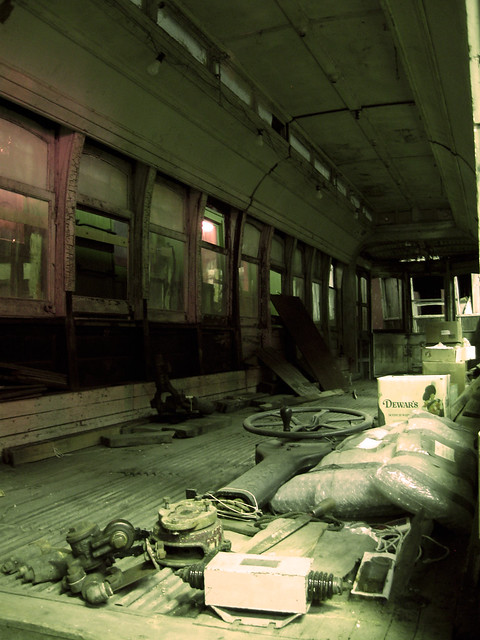
Our fair city once had a subway
And this car is all that's left

IMG_0701

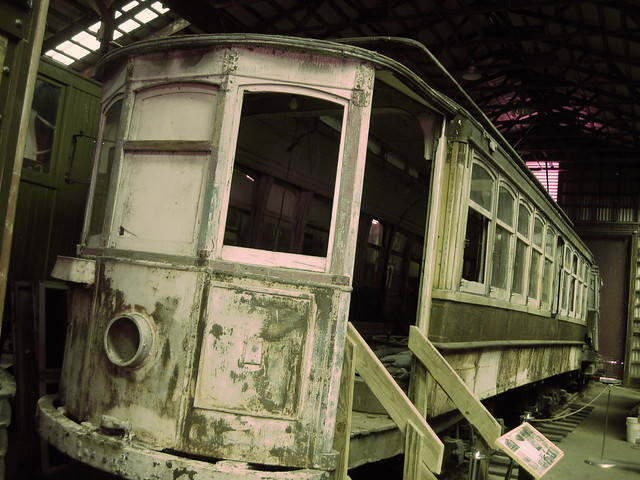
The outside is disastrous
And the inside looks bereft.

IMG_0712

We took a ride on the trolley,
Which long ago was hopping,
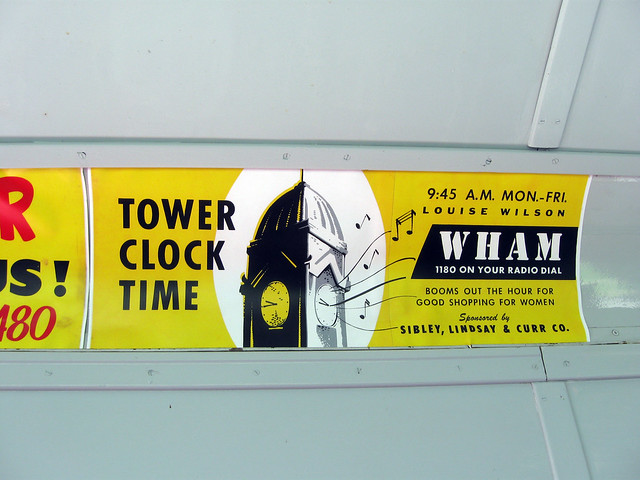
Back when women needed to know
The hour for good shopping.

IMG_0737

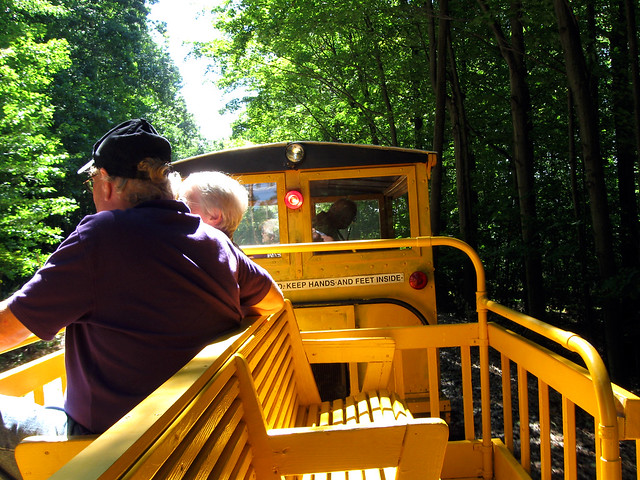
They ferried us in little cars
Out on the trolley tracks.
It was so hot in the open
We nearly had heart attacks.

IMG_0739

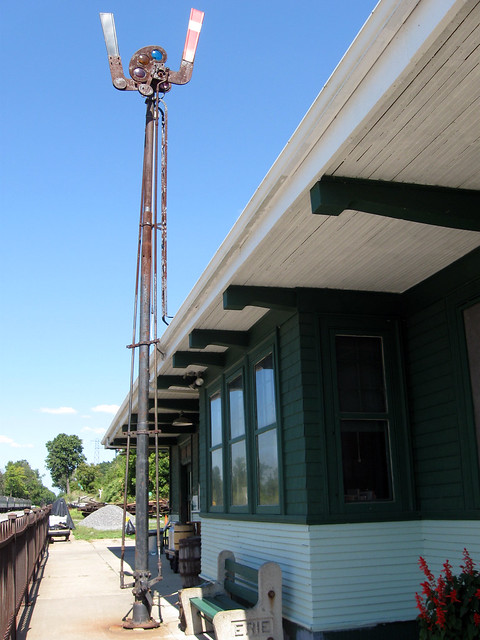
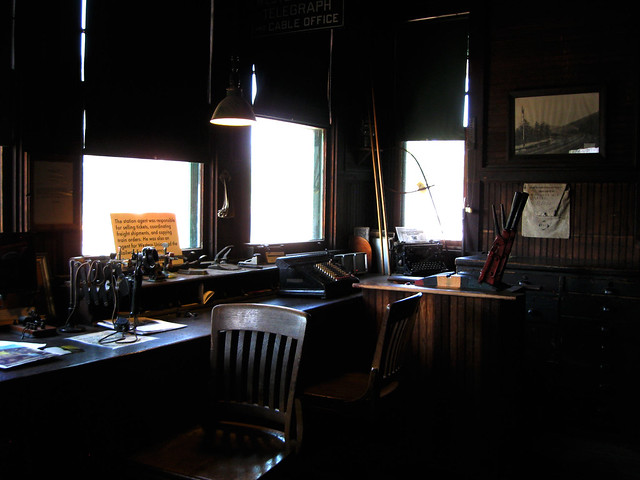
The station was quaint and old;
Not much had changed within,

IMG_0745

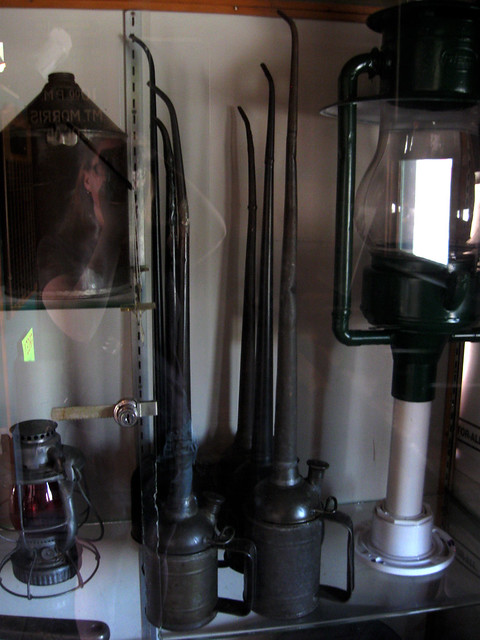
But the oil cans sat behind glass,

IMG_0747x

And the stationmaster was not in.

IMG_0791

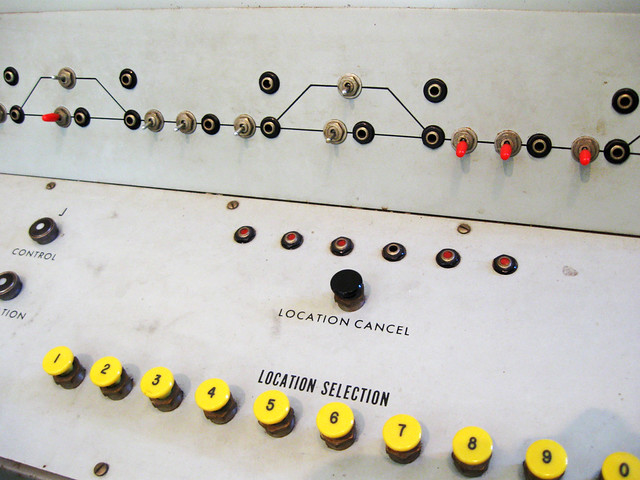
I wanted to push all the buttons,
And to tell the truth, I did,

IMG_0814

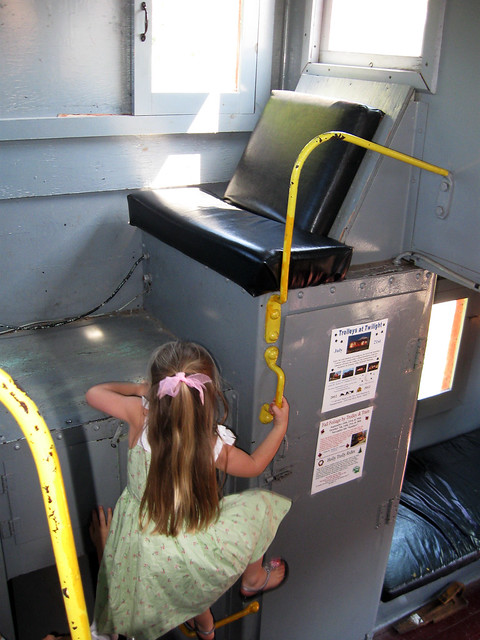
And I also snapped a picture
of this adorable kid.

IMG_0822

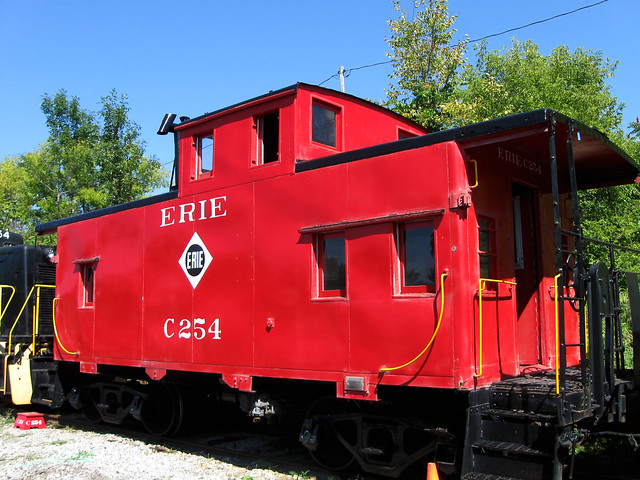
She was in the red caboose,
Which looked brand new to me, or

IMG_0823

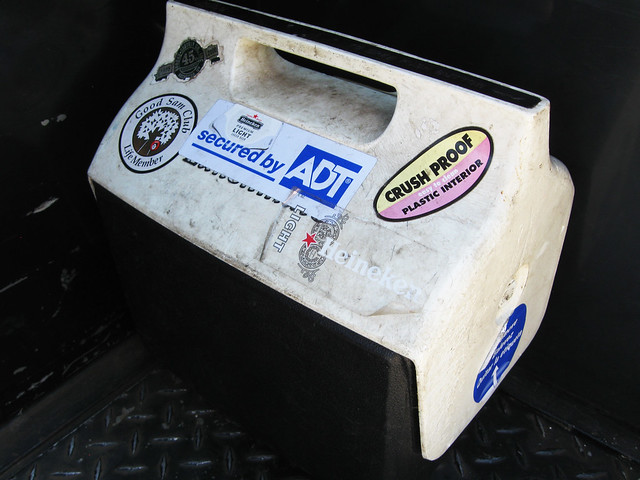
At least cleaner than this cooler,
(Secured by ADT).

IMG_0812

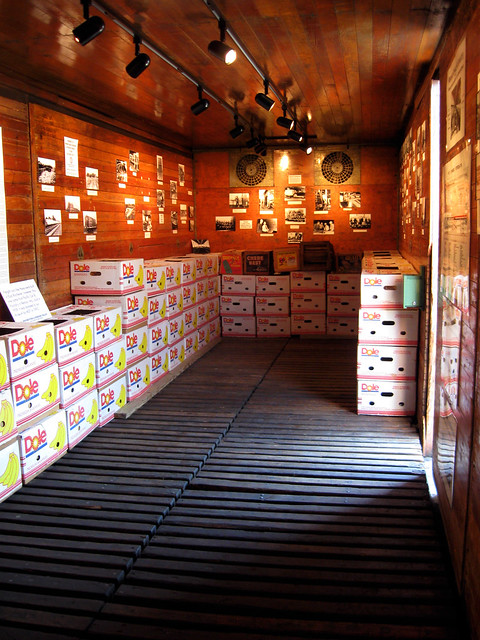
The refrigeration car was pretty cool;
Please excuse the pun.

IMG_0809x
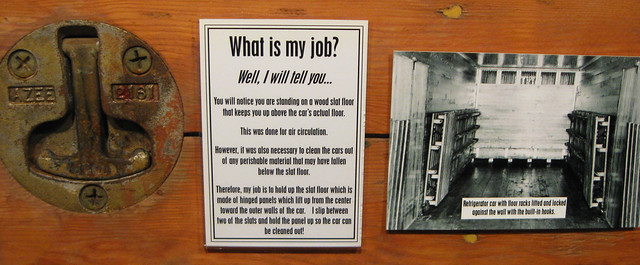
The sign says: "You will notice you are standing on a wood slat floor that keeps you up above the car's actual floor. This was done for air circulation. However, it was also necessary to clean the cars out of any perishable material that may have fallen below the slat floor. Therefore, my job is to hold up the slat floor which is made of the hinged panels which left up from the center toward the outer walls of the car. I slip between two of the slats and hold the panels up so the car can be cleaned out!"

If you think I'm really sorry,
I'll pull the other one.

IMG_0782

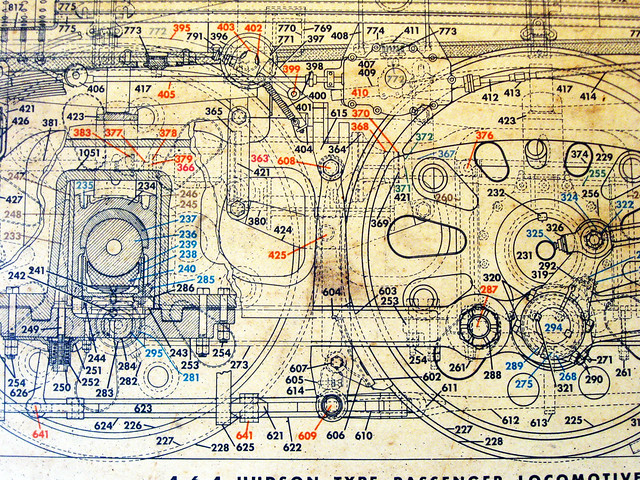
Here's a chart of train parts
I'd happily hang on my wall,

IMG_0889

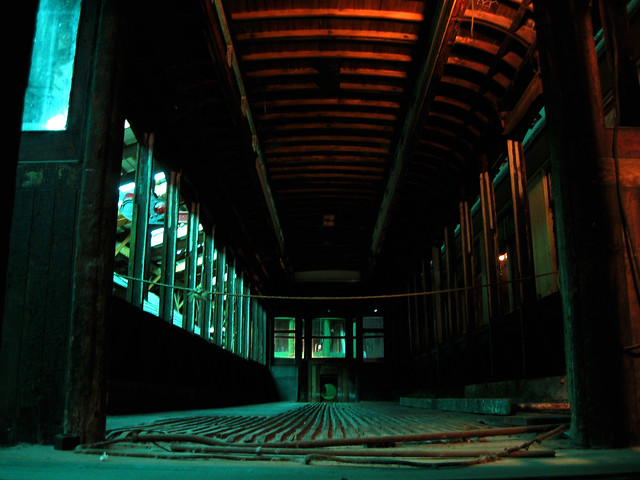
And here's a shot of a car
Tinted with a gloomy green pall.

trolley compilation

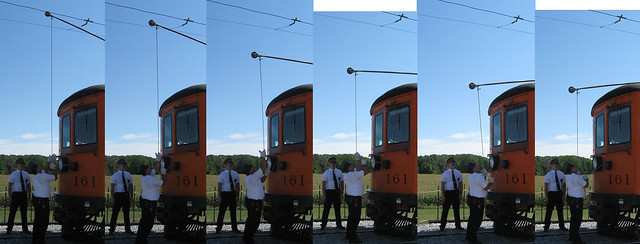
We got a bit overexcited
About switching the trolley pole.
The driver couldn't help but notice
And thought we were rather droll.

IMG_0779

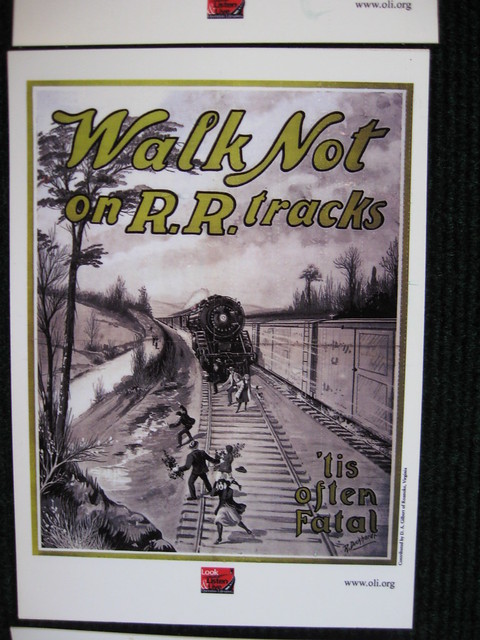
But the best part of the museum
For a person whose humor is dark
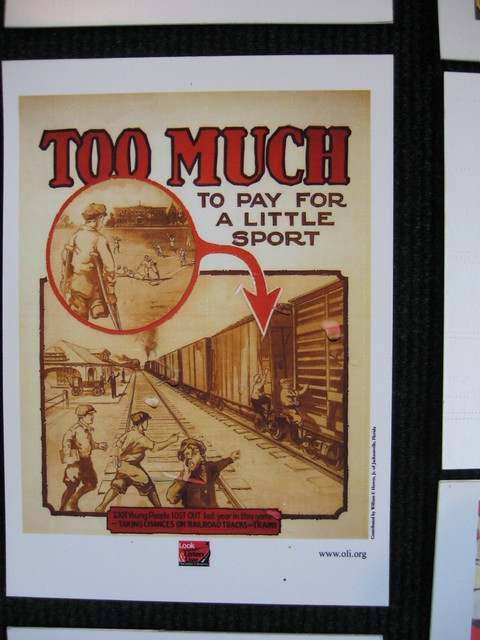
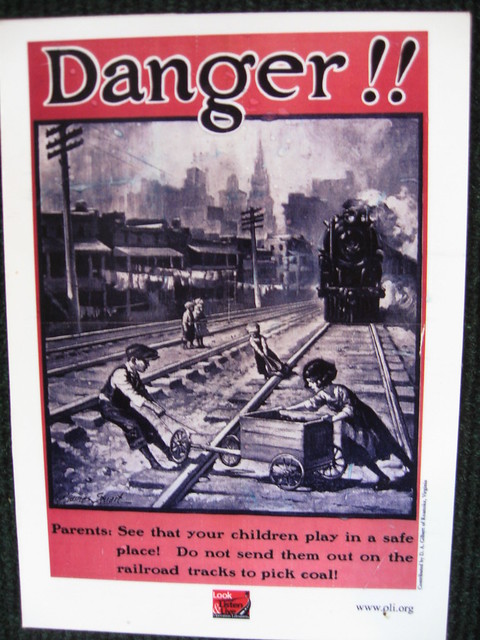
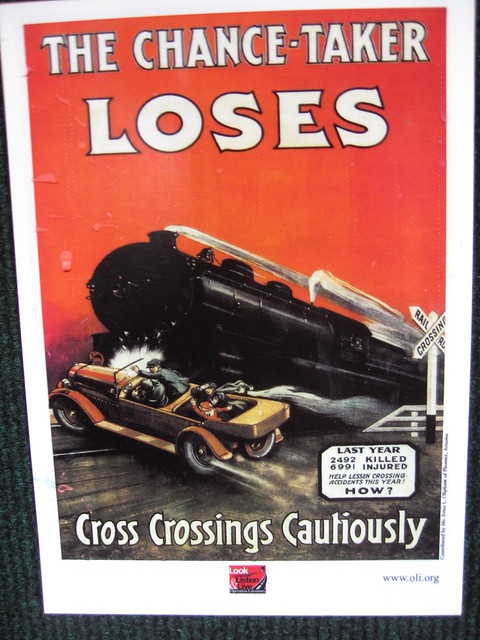
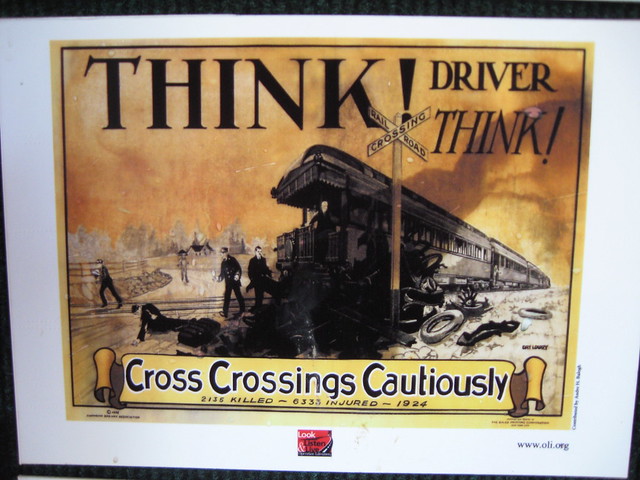
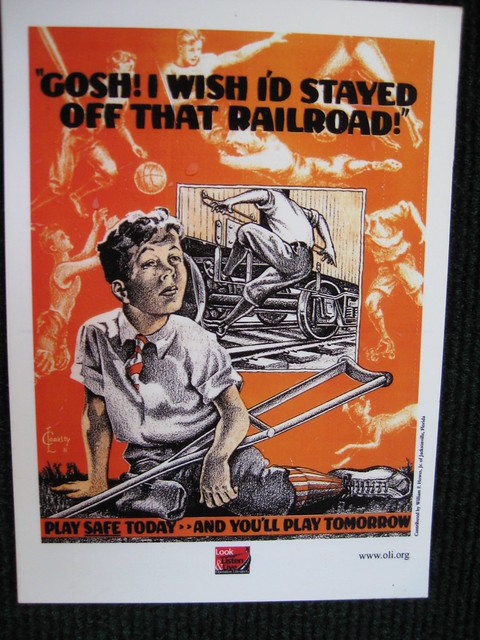
Were these safety signs on display
Which frankly I thought were a lark.

IMG_0776

IMG_0775

IMG_0774

IMG_0773

IMG_0772

When next you go by the railway
Remember these signs and don't scoff,
Because if you so much as look at a train
Your leg will come right off.

Friday, February 15, 2013

Susan B. Anthony

Bonus non-Monday post! But first a note: Be not afraid, for the header will be back. Flickr had a glitch and lost it, and I keep forgetting to put it back up.

And now for today's special two-part post on the hot topic currently on everyone's minds! Yes, that's right: women's suffrage!

Part 1: Votes for Women

Today, February 15th, is Susan B. Anthony's birthday, and there is currently a display in the library about her. That display (of items and documents behind glass) coordinates with another display (of books you can check out) by the reference stacks. There is nothing we like more, in the library, than displays. Every time anything remotely interesting happens, we look at each other and say, "Do you think we can do a display on that?" The answer is always yes. So we're doing these displays, and I'm in charge of the book one. In deciding what to put in it, I realized that I didn't know enough about Susan B. Anthony, so I started reading about her. And then I got this grand idea that I should include in the display a sampling of contemporary newspaper articles about her, because hey, it would only add ten additional hours of work!

I decided to focus on the time Anthony got arrested for voting and was put on trial. I thought for sure there would be some great articles on that, and I was right! It was really fun watching the trial unfold as told by journalists who had no idea what to make of Anthony. One referred to her as "that sublime and infatuated pantaloonatic," which is now my preferred term for trailblazing women. As I was watching things progress, I was awaiting the triumphant moment when the judge hands down Anthony's sentence, which was a fine of $100, and she jumps up and cries out, "I will never pay a dollar of your unjust penalty!" (It is possible I'm imagining that moment as being more dramatic than it was . . . but honestly, I can't see how it wouldn't be dramatic.) I waited and waited and read every article about her sentencing that I could find, but it did not appear. "This is strange," I said to myself. "Did it even happen? Is it apocryphal?" The newspapers were emphatic: she never said it. Take this Philadelphia Inquirer article for example:

Print

It says right there, in print: "The judge then sentenced her to pay a fine of one hundred dollars and costs of prosecution, and immediately added . . ." It is the and immediately added that interests me. Because, according to Anthony, it isn't true. According to her account of her own trial, she made a whole speech between the judge announcing the fine and then telling her she would not "stand committed" (i.e. go to jail). "I will never pay a dollar of your unjust penalty" was only the beginning of it; she goes on for a whole paragraph. In her account, she does a great deal more talking during her sentencing than the judge does.

It's hard to tell how accurate this is. Another account by Anthony's friend has Anthony saying little more than, "I don't have any money and in fact I'm ten thousand dollars in debt." And Anthony's account does seem suspiciously eloquent. On the other hand, Anthony was quite accustomed to public speaking and the accounts agree on other shorter but equally eloquent remarks she made. In fact, she was so famously vocal that there was jokes going around in the newspapers about how funny it was that the judge even bothered to ask the legally-required question at the beginning of the sentencing: "Does the defendant have anything to say why the sentence should not be pronounced?" Why bother asking, comment the newspapers; of course she had something to say. Susan B. Anthony always has something to say. All accounts then agree that when Anthony started talking, the judge told her to stop.

It's possible that Anthony found herself somewhat cowed by the strikingly unjust judicial system and all the men in charge of it. What she reported herself saying may have been what she wanted and intended to say had she not been facing a hostile judge intent on committing a brazen act of injustice -- not only did he find her guilty, but he announced that he would find her guilty before her trial started, and never asked the jury for their verdict, instead demanding they find her guilty. Under these circumstances, it may not have been possible for her to say what she wanted, so when she wrote up her account, she added in the things she would have said. Knowing people would be interested, it was an opportunity for her to make the case to the public that she had not been able to make in court.

But it's also possible that the men in charge of newspapers were willing to report on the antics of these "wild women" who voted only insofar as they were amusing (and losing). Few articles show outrage at her daring to vote; they're amused at the idea. A woman! Voting! Ahahahahahahahaha. What a pantaloonatic! One much-reprinted article noted in its report of Anthony's arrest that she did indeed admit to being a woman at the time that she voted, har har. The tone of almost all the articles is jocular if not outright condescending. When Anthony was arrested, the general response was surprise. The New York Herald-Tribune said that their voting had "taken on a new and less good-humored phrase." I am not sure what they thought good humor had to do with women trying to exercise their constitutional rights, but it seems they thought it was kind of a joke. Women were so powerless that the antics of suffragists could be tolerated because they were not perceived as a threat. But Susan B. Anthony was a bit threatening -- even if she was quiet in court, she certainly wasn't outside of it. Which could explain why, if Anthony stood up (as I imagine it) and declared to the judge that she would not accept her sentence, it seemed less funny and more frightening, and was left out of the news. What if women were to vote? What might they do?

Part 2: The Woman Voter

By coincidence, the same day that I read the above article, I ran across a book in the stacks called The Woman Voter: An Analysis Based upon Personal Interviews (1955). This is how it begins:

"It cannot be denied that women are fascinating. But it can also be said, without being at all facetious, that the voting behavior of women is even more fascinating."

The book is little more than a pamphlet -- sixteen pages of summarized interviews in which women show themselves to vote in neither a more nor less fascinating way than men. I wouldn't say women or their opinions are exactly denigrated, but there is a tone of pleasant surprise: Why, women are well-informed! They are interested in politics! They understand that politics affect their lives! Their opinions are not identical to their husbands'! Sometimes they even influence their husbands' opinions!

Without being at all facetious, I was baffled as to why such a book should exist. And then I realized that women had only been voting for 35 years by that point. Voting was new for women, and women voting was new for the government. It's almost like women were new for the government. Who are these creatures? What do they want? How can we get them to vote for us? Which just goes to show how important the right to vote was, since the government didn't have to care about women at all until they had it.

I suppose this post is just an excuse to spend some time thinking about Susan B. Anthony and what she and other supporters of women's suffrage believed and accomplished. It isn't only about voting, after all. There was something else she said (or wanted to say) at her trial that struck me: "As then, the slaves who got their freedom must take it over, or under, or through the unjust forms of law, precisely so, now, must women, to get their right to a voice in this government, take it; and I have taken mine, and mean to take it at every possible opportunity." It's really about rebelling against unjust laws, whatever they may be. Since we have a lot of those, I think it's worth remembering Susan B. Anthony not just in the context of women's rights, but in the wider context of justice; standing up for civil rights over, under, or through unjust laws, at every opportunity.

Monday, February 11, 2013

Claude Bragdon's Terminal Velocity

At work, I'm in charge of the faculty book display. By "in charge" I mean I do the gruntwork that other people tell me to do. It is one of my least favorite parts of my job, on account of the alarm system and the embarrassing number of times I've had to show my ID to security to convince them that I'm not breaking in. Oops! Anyway, the books stay in the display for three years, and there's one that's been in there since I started here about Claude Bragdon called Claude Bragdon's Beautiful Necessity. I always misread it as Claude Bradgon's Terminal Velocity. I don't know, it makes a lot more sense to me!
Claude Bragdon was an architect (among other things) who had a practice in Rochester from 1900 to 1917 or so. He was part of the Arts & Crafts movement, but had his own particular style. He was a pretty prolific writer, for an architect, and published whole books in which he said things like: "From the architecture of a true democracy, founded on love and mutual service, beauty would inevitably shine forth; its absence convicts of us a maladjustment in our social and economic life. A skyscraper shouldering itself aloft at the expense of its more humble neighbors, stealing their air and their sunlight, is a symbol, written large against the sky, of a will-to-power of a man or a group of men --  of that ruthless and tireless aggression on the part of the cunning and the strong so characteristic of the period which produced the skyscraper. One of our streets made up of buildings of diverse styles and shapes and sizes  -- like a jaw with some teeth whole, some broken, some rotten, and some gone -- is a symbol of our unkempt individualism, now happily becoming curbed and chastened by a common devotion, a common danger."

To this, some would say Yes yes yes! And some would say No no no! He goes on to say that too often style is subjugated to practicality, when they should be equal and inseparable, which I think is difficult to argue with, but then again, I have never studied architecture and had to read up on Bragdon for this post, so what do I know. Anyway, Bragdon is an interesting character, about whom Rochesterians may be hearing more as the city goes with plans for its new train station. The style of the old Bragdon Station, which was demolished in 1965 (to build a parking lot, godhelpus) is being incorporated into the plans for the new station. This is the one (1) and only example of Rochester making a sound architectural decision that I've heard of in the past several years, and I am very pleased.

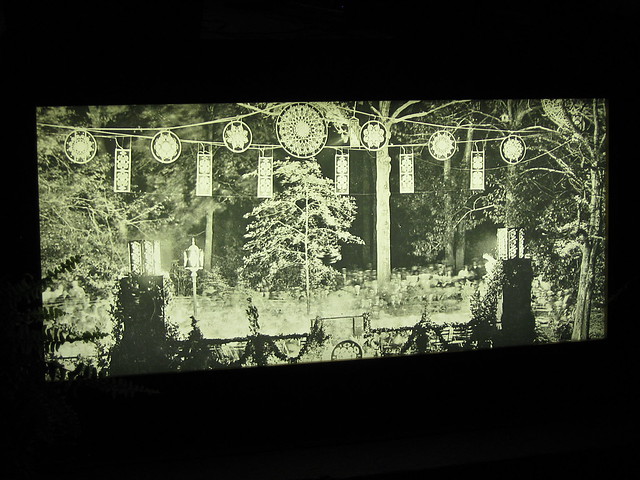
The three paragraphs of background you've just read have been basically pointless because this post has far less to do with his architectural accomplishment as it does with his second career in stage designing, and even that is tangentially related to my point. In 1916, Bragdon staged his first Festival of Song & Light in Highland Park. I have stolen this description from the Rush Rhees Rare Books Department's description of the Bragdon Family Papers: "In 1915, Bragdon introduced his new system of ornament, which was based upon four-dimensional geometry. . . . Using projective ornament and color theory, he created complex installations marrying choral music to colored light. These festivals, with stage sets framed by thousands of lanterns and screens fashioned like stained glass windows, were witnessed by audiences of up to 60,000. For the next thirty tears, Bragdon explored various means of animating color and light, including 'color organs' that linked chromatic and musical scales with electricity to play four-dimensional colored light forms."
This is a (sadly) black-and-white photo of a photo of one of these festivals - possibly one in New York.

IMG_1082

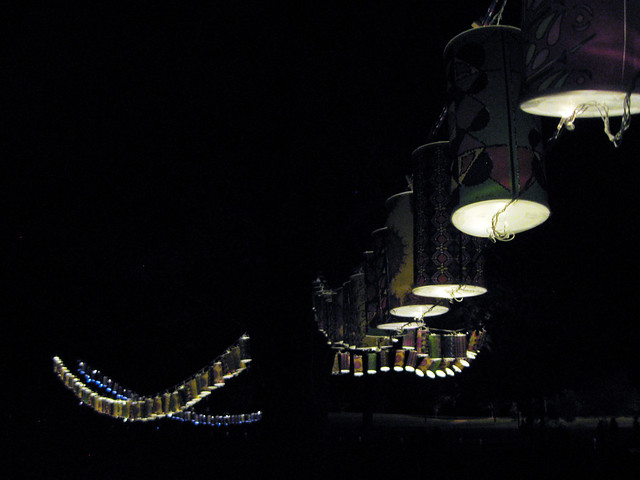
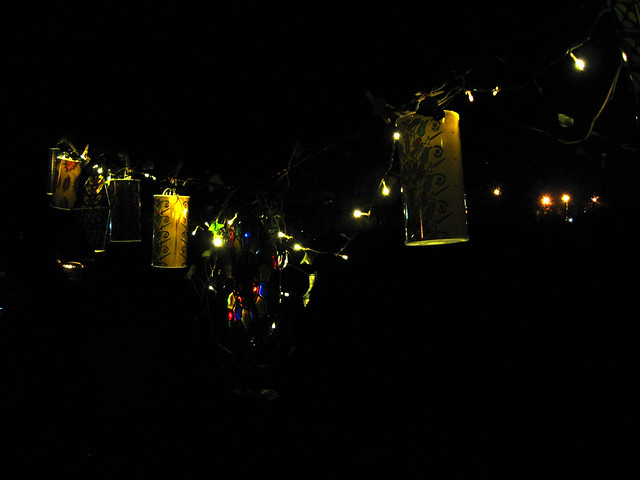
Last August, the Historic Maplewood Association and the Rochester Oratorio Society put on a similar event. It did not exactly live up to the Claude Bragdon originals, but it was a solid effort. My main complaints were that (1) I was expecting beautiful, ethereal choral music, and instead, it was pretty corny a capella standards, complete with some contributions by Disney, and (2) the lanterns were neither numerous nor luminous enough. I was not reminded of the "cathedral without walls" that Bragdon wanted to evoke. Stained glass patterns printed on plastic was a good idea, but not quite breathtaking. They should have been bright and warm, but instead they were blue and cold.

IMG_1054

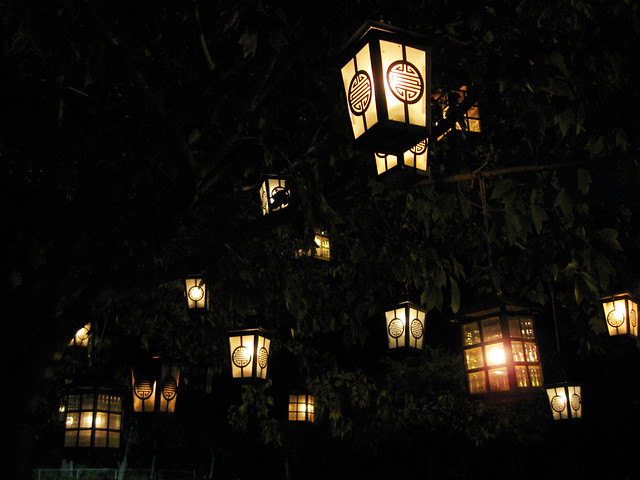
Which isn't to say it wasn't pretty. One tree had a lovely collection of lanterns, even if there was no four dimensional color theory hocus pocus going on.

IMG_1042

This colorful glass thing came a bit closer to what I think Bragdon would've had.

IMG_1080

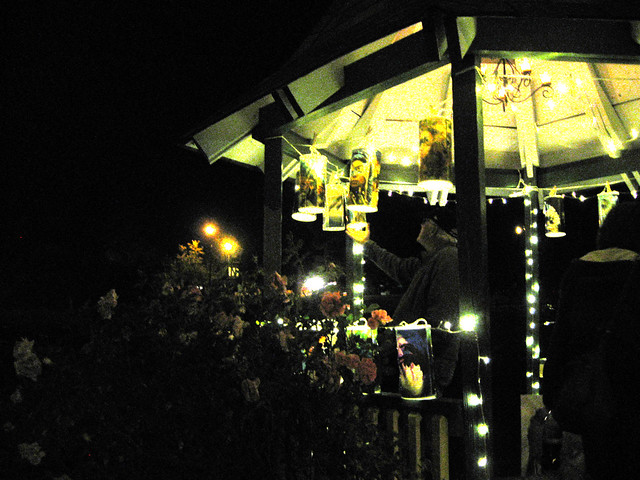
And for no particular reason, I liked this gazebo decked out in lights, complete with an old man.

IMG_1083x

I can only hope this will become an annual festival and will improve every year. It would be wonderful to see a really accurate reproduction of one of Bragdon's Festivals of Song & Light, for I bet it was a sight to behold.

Monday, February 04, 2013

Buffalo Central Terminal

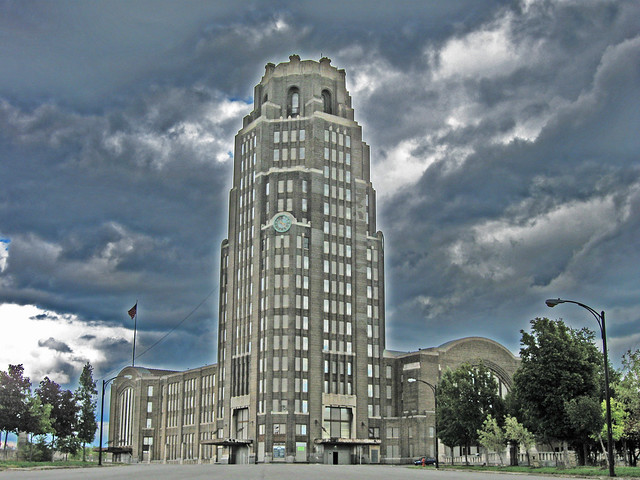
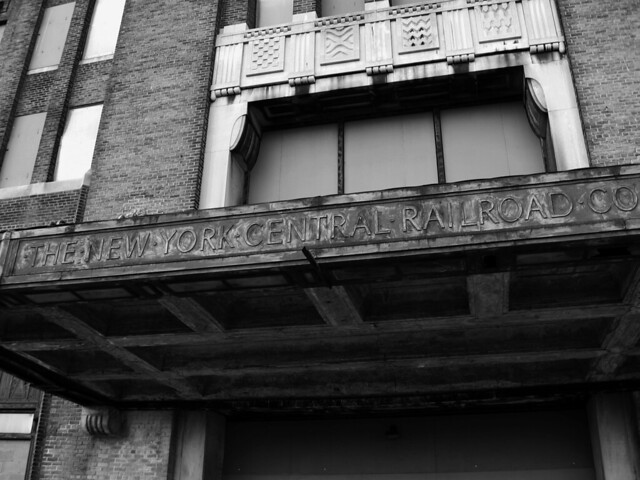
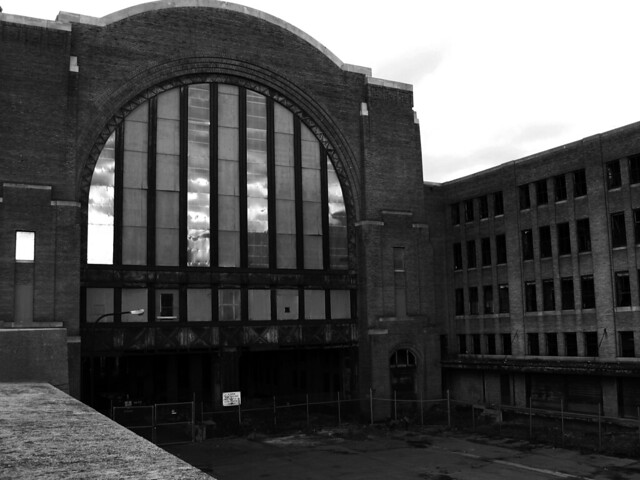
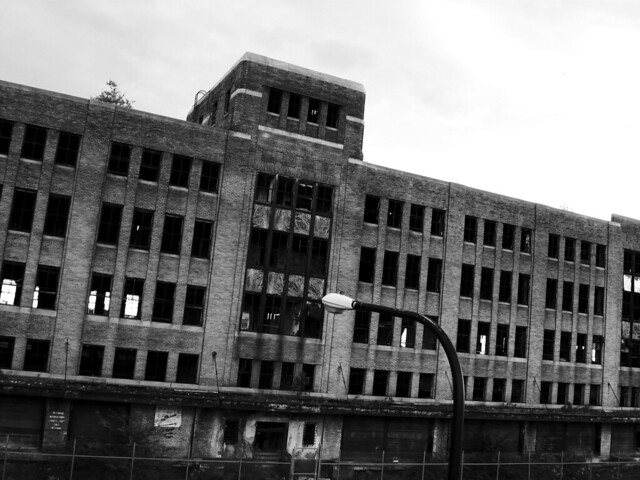
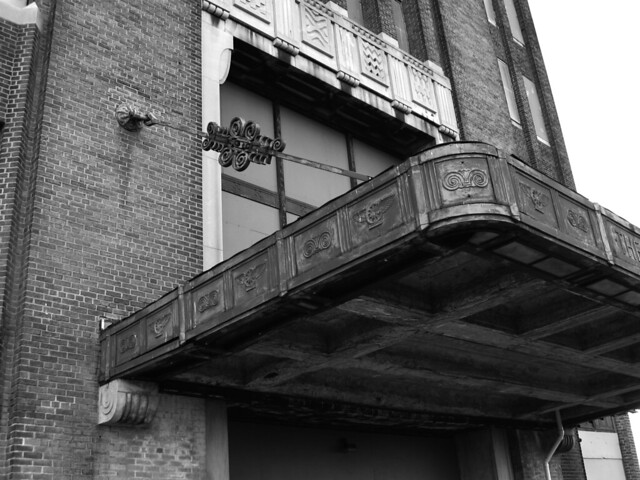
This is the old Buffalo Central Terminal. This shall be a picture post, because I don’t know much about it, except that it’s really nice architecture, and sad and creepy in its abandonment.

IMG_1002xx

Don’t worry, I didn’t do this to all the photos, because it's ridiculous. However, it is the only way I could convey the haunted feeling it gives off.

IMG_1020x

IMG_1030xx

IMG_1035xx

IMG_1023x

And that’s the Buffalo Central Terminal.

Monday, January 28, 2013

Don't Give Up the Ship

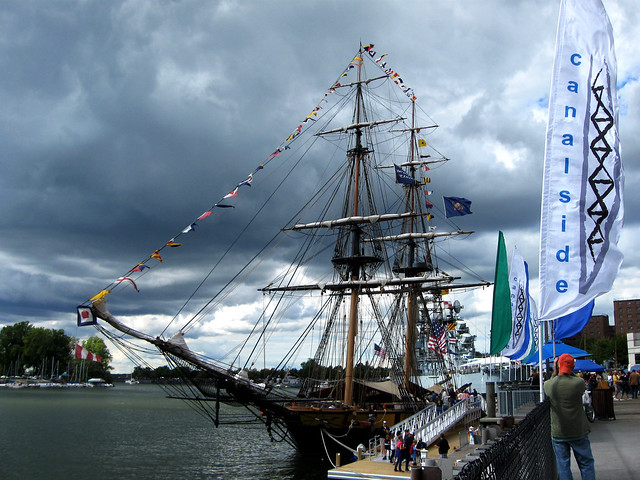
Historian Esquire and I like to look at historical things. One of the historical things we looked at over the summer was the USS Niagara, which was docked in Buffalo for a little while. The USS Niagara was built in 1813 and was used in naval defense on Lake Ontario during the War of 1812. Historian Esquire and I are probably the only ones who happen to have been reading up on early American history lately, so here are a few things to remember. First, the war of independence was not so much about freedom as about Indian land, and the money that came from the sale of Indian land, and whether that money would stay in the colonies or go back to England. The loyalty of the Indians, and who would get the opportunity to buy/steal their lands, continued to be an issue between the two nations. Second, even after the Treaty of Paris was signed in 1783, ending the Revolutionary War, not everyone thought the war was really over. The British retreated not all the way to England, but only to Canada. For the next three decades, it was not obvious to either nation that the other one wouldn’t attack at any time. Third, when the colonists won the war, it was not clear that their little republic was going to last very long. The authority of the new American government was not accepted by everyone, and the founding fathers were still arguing about whether it was the federal government or the states that should have more power. Basically, even though the war was officially over, everything was in flux.

By 1812, there were further problems. The U.S. thought Britian was trying to monopolize trade with Europe. They were also annoyed that British naval captains kept impressing American sailors. On the American frontier (that includes western New York, Pennsylvania, and Ohio), it was an issue of Indians. Both the British and the Americans were afraid of having to go to war with the Indians, and they each wanted them on their side. But, they also wanted their extremely valuable land. As the state of New York systematically dispossessed the Indians of all but a few patches of land, the British saw an opportunity to win the Indians over, by giving them all kinds of help -- and arming them against the Americans.

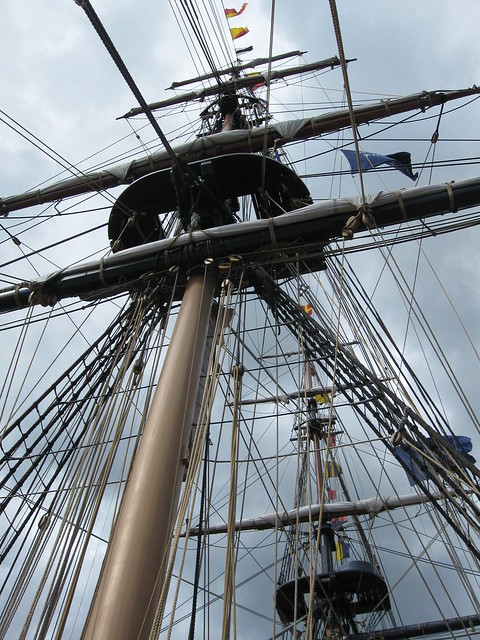
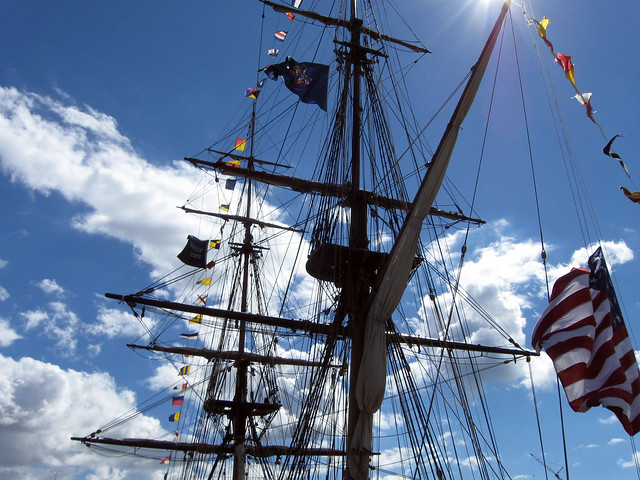
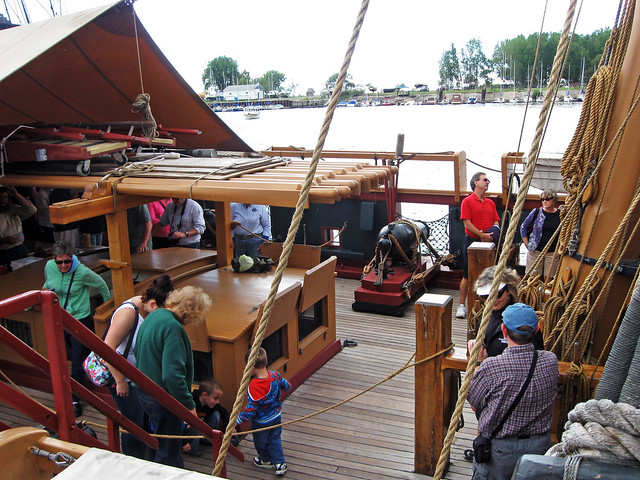
So, finally, in 1812, the former colonies and their former rulers went to war once again. The U.S.S. Niagara was in that war, patrolling Lake Erie. This ship is a replica, with just a couple of symbolic timbers from the original. But it was still just about the coolest thing ever.

IMG_0984

It is 198 feet long, if you count the spar. The deck measures 116 feet from end to end.

IMG_0931

The main mast is 118 feet tall -- longer than the length of the deck.

IMG_0963

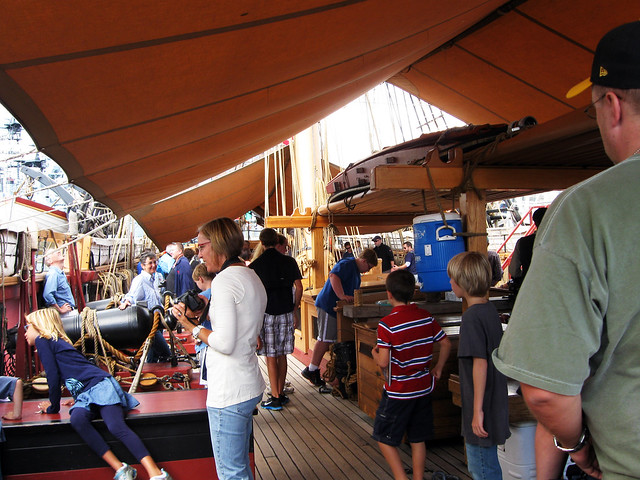
There are two 12-pounder long guns, and eighteen 32-pounder carronades. I don’t know what these are, but I assume if I saw one I’d call it a cannon.

IMG_0949

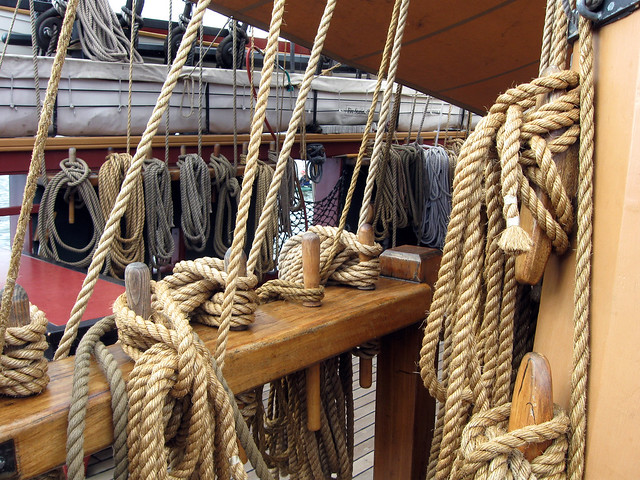
There is . . . a lot of rope.

IMG_0944

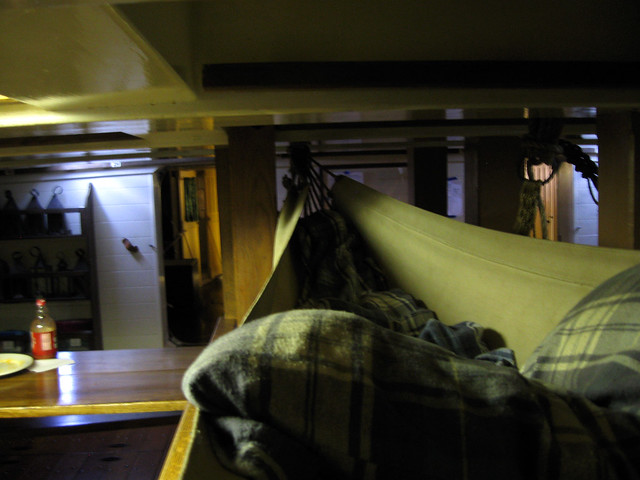
The crew numbered 155. Belowdecks, there wasn’t enough room to stand up. They slept in hammocks. It did not seem pleasant down there, and everyone around me was cheerful and showered. I can only imagine what it would be like with 154 other smelly, overworked men around.

IMG_0938

I forgot all the other facts.

IMG_0902

The original ship was purposely sunk in Lake Erie a few years after the war, to preserve it. About a hundred years later, it was raised and patched up. Since then it's been so extensively restored that it's not really the same ship. But it's still remarkable -- both that they were able to find the funding to restore it, and that the very new nation that first built it has survived (so far), in spite of how unlikely that seemed in the first few decades.

Monday, January 21, 2013

Of Wheels and Raccoons

Will this post be about LeRoy's transportation museum, or will it be about roadkill? I'm not sure yet, so I guess we'll have to take our chances.

When Ivan and I went to the Jell-O Museum in LeRoy, we were surprised to discover that there's another entire museum in the basement, which is full of old carriages and sleighs and transporty things of that nature.

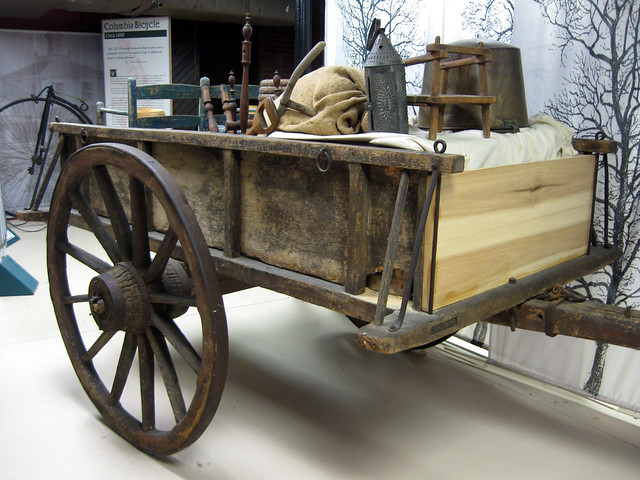
Covered wagon (1840s)

IMG_0475

The first thing you'll notice is that this wagon is not covered. You can't have everything. It's the non-covered part of a covered wagon, which is cool enough. Having written and thought about covered wagons a lot lately, I was kind of horrified by how small it is. Imagine putting your entire family's necessary belongings in this wagon. I think I have more toiletries than would fit comfortably in here. What also impressed me is how thick the wood is, and how sturdy the wheels are. This is one tough wagon. Which probably would still have needed constant repairs. And really tough horses.

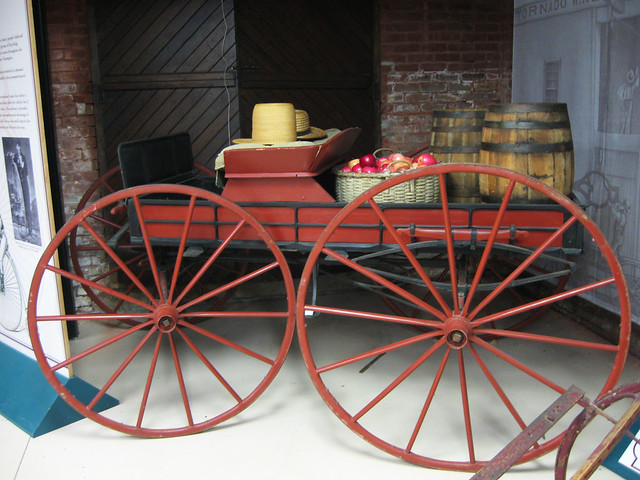
Example 2: Market wagon

IMG_0500

The market wagon is to the covered wagon as a tarantula is to a daddy long-legs. The covered wagon could eat the market wagon for breakfast. On the other hand, the market wagon seems to have shock absorbers, which would make riding in it much more pleasant. And since you'd probably only go short distances, I'd much rather be in this wagon than the covered wagon. Sucks to your asthmar, pioneers! Your wagon is terrible.

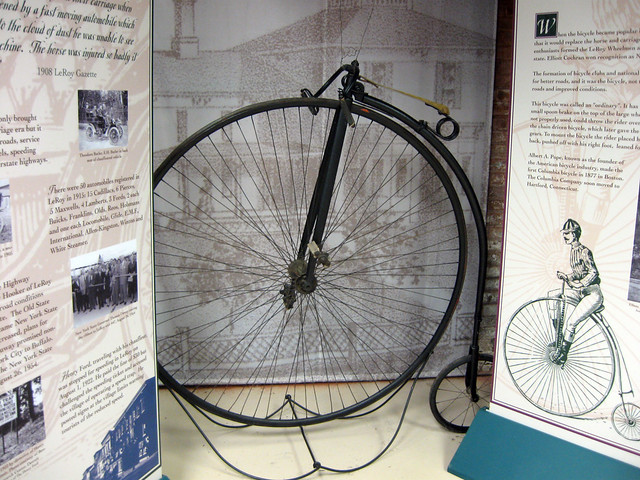
Example 3: Penny farthing

IMG_0503x

If you really want to travel in style, and have impeccable balance, this set of wheels is for you! However, if you fall off, you may break something, or crush someone else due to the great height from which you will fall, so this is a use-at-your-own risk-and-employ-a-lawyer mode of transport.

The basement museum is a bit cramped, and it was hard to get good pictures of the rest of the things - a number of carriages and sleighs that smelled a bit musty and creeped me out a bit. Especially the ice skates lying on the seat of one. As I believe I've said before, I do not approve of two hundred-year-old shoes. History and anthropology and archaeology be damned: shoes of dead people should be destroyed immediately! I believe this so fervently that I think I might start a Cult of the Destruction of Shoes, which will entail shoe destruction and also a money-laundering scheme, which I think is typically how modern cults operate.

Anyway, by the creepy sleighs full of creepy shoes there was a sign. And on the sign there was a poem. A poem that I thought either Ivan or I had taken a picture of, but it turns out we didn't, even though we stood in front of it for ten minutes mocking it. So I will summarize the poem: it was a moral tale about a very shallow young lady who was asked to go on a sleigh ride by a gentleman caller. She said yes, because no one in their right mind turns down a sleigh ride, but she wanted to look beautiful so she refused to put on her hat and mittens, or muff and cape, or whatever. People told her she should really be properly dressed, and she waved away their warnings. At one point during the sleigh ride even her beau turned to her and said, "Don't you want to put on a hat or something?" And she said, "No no, I am fine." But of course she wasn't fine. She was slowly freezing to death. Because apparently this was a less of a sleigh ride and more of an iditarod. By the time she admitted she was "a little cold" it was already over for her. That's right, SHE DIED. It was a moral poem about the pressing issue of delicate ladies not wearing proper outerwear. Let this be a lesson to you! Do not go on sleigh rides!

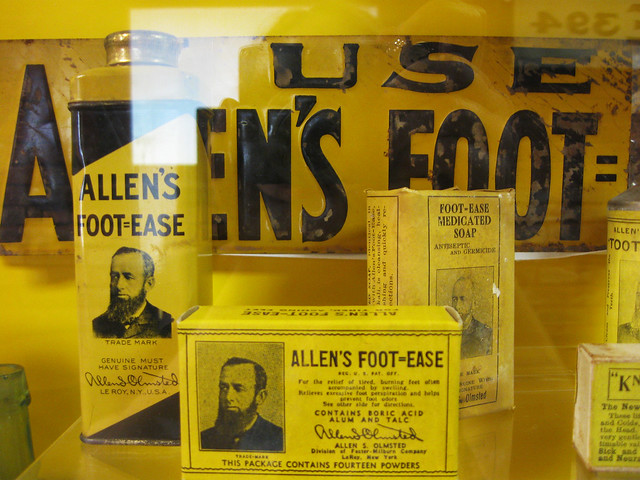
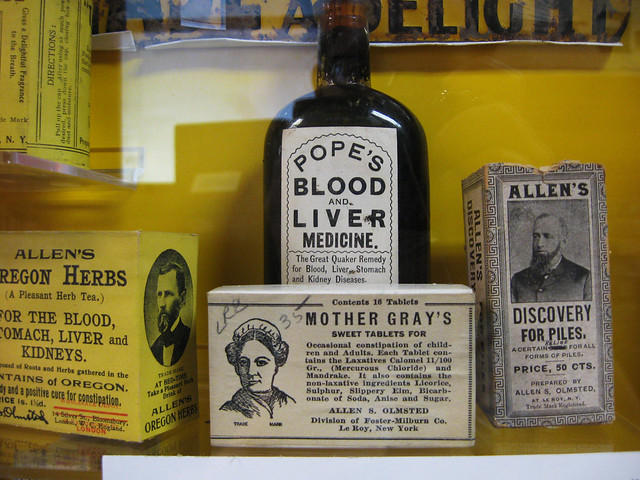
In addition to this wonderful glimpse into how weird the Victorians were, the basement also boasts a small collection of what I'm guessing is early-twentieth-century medicine. These are my favorites.

Allen's Foot=Ease

IMG_0519

In attractive yellow packaging. I'm not being sarcastic. I would buy this. It has the must-have signature on it! (Now I'm being sarcastic.)


Mother Grey's Sweet Tablets for [Everything]

IMG_0516

I assume this is chocolate?

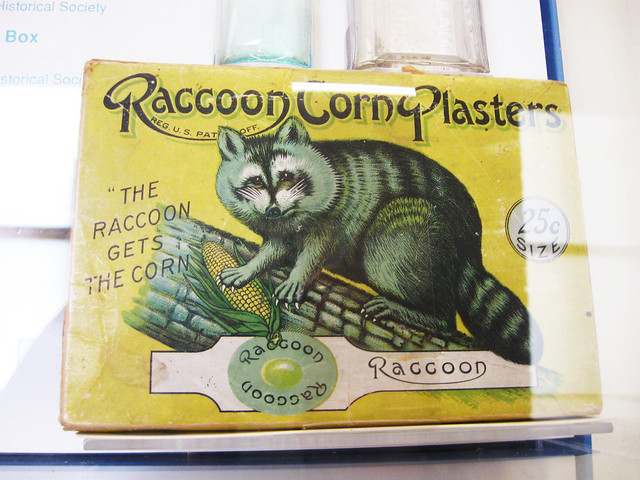
Raccoon Corn Plasters

IMG_0522

The raccoon gets the corn! I can't express how much I love this approach to marketing. More advertisements these days should focus on how pests can relieve your bodily ailments through the use of puns. They say laughter is the best medicine. This made me laugh quite a lot.

Hopefully this will convince each and every one of you that the $3 entrance fee to the Jell-O Museum Complex is absolutely worth it. If not, don't worry, because at this point we were only 3/5 done! For another small fee (or donation, I can't remember), you can also go into the LeRoy Historical Society and look at cool stuff in there.

IMG_0531

I wasn't allowed to take pictures, but I remember liking a lot of the art. And there was an astonishing amount of crockery. For such a small sum, the LeRoy Experience, as I'm now calling it, was an amazing deal. Highly recommended.

Monday, January 14, 2013

Of Jell-O and Giraffes

When Ivan came home to visit last summer, we decided to have an adventure. This adventure started, as they usually do, with a small smackerel of something.


This case of delights is in the Pittsford Dairy, where they also keep many other delights such as fresh milk in glass bottles, tubs of wholesome-looking butter, ice cream, and loaves of apple strudel bigger than your head (which is the appropriate size for apple strudel).

After the Pittsford Dairy, we went on our way to the Jell-O Museum, which is about an hour away in LeRoy. We didn't know what to expect. What is there to discuss about Jell-O, really? It's Jell-O. So we were unprepared for the bizarre and delightful experience that we ended up having.

We made guesses beforehand on the ratio of old gentlemen to old ladies behind the counter, and we were both wrong: it was one elderly woman and her granddaughter. The elderly woman took us to the entrance of the museum, sat us down on a bench, and gave us an incredibly charming oral history of Jell-O and the museum. You could tell that she had given this history many, many times, simply because it was so polished, but she still enjoyed making the jokes and still laughed at them. Ivan and I were thoroughly won over. The entire museum was like that: it looked like very dedicated people who really cherished Jell-O had gotten together, raised a bit of money, and put together a pretty decent museum with whatever artifacts they could get their hands on, and construction paper.

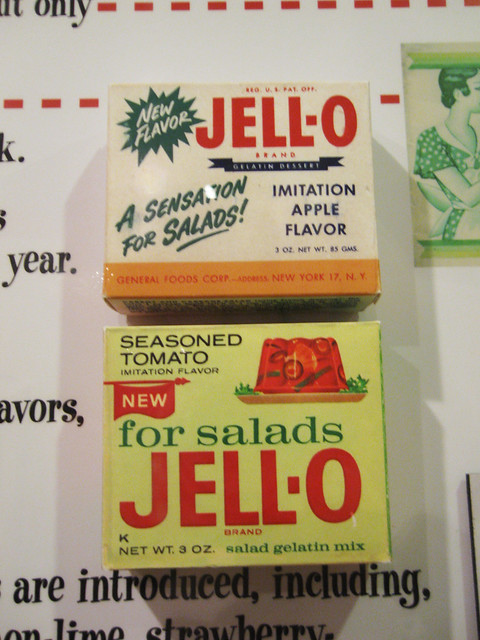
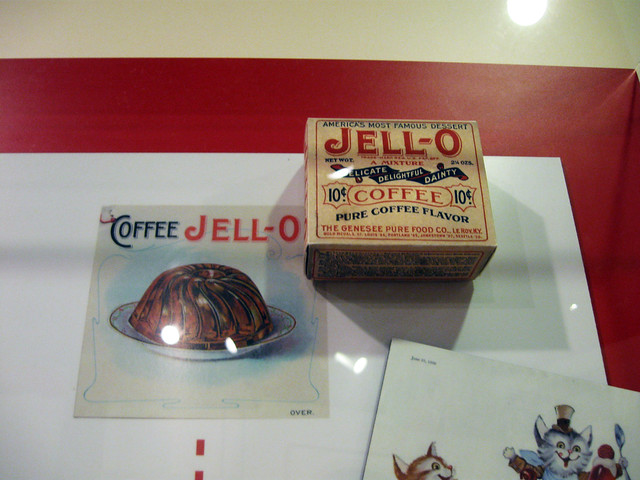
It turned out they could get their hands on quite a lot, most of which was advertising. That sounds boring, but   it was a fascinating lesson in graphic design during the last hundred or so years. Because they used painting in advertisements, there were a lot of really lovely still lifes . . . of Jell-O. Jell-O is such an odd substance, I found it impressive that it was so nicely rendered. I would put this on my wall, no joke.


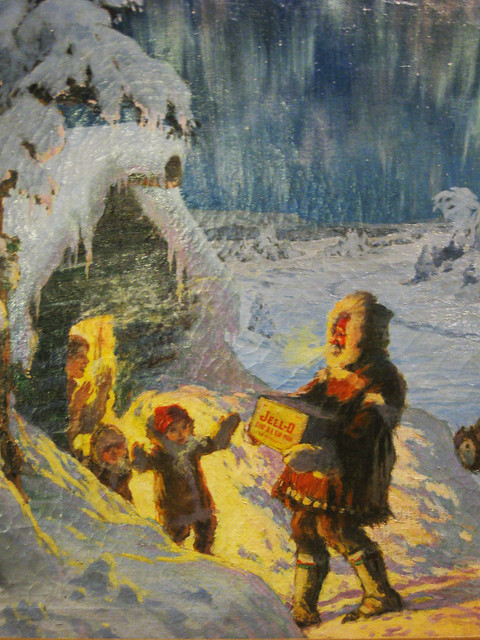
What's hilarious about these paintings is how they make it look like Jell-O was the center of American culture. Of course all advertising wants to depict its product that way, but for some reason the fact that it's Jell-O is particularly absurd to me. For example: behold this Eskimo bringing his hard-won Jell-O back to his igloo.


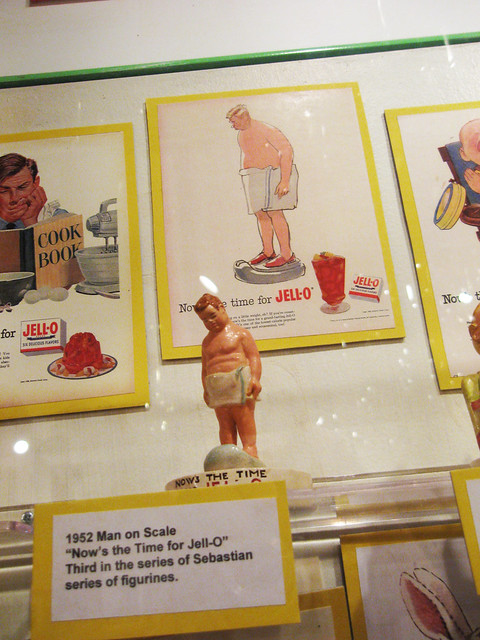
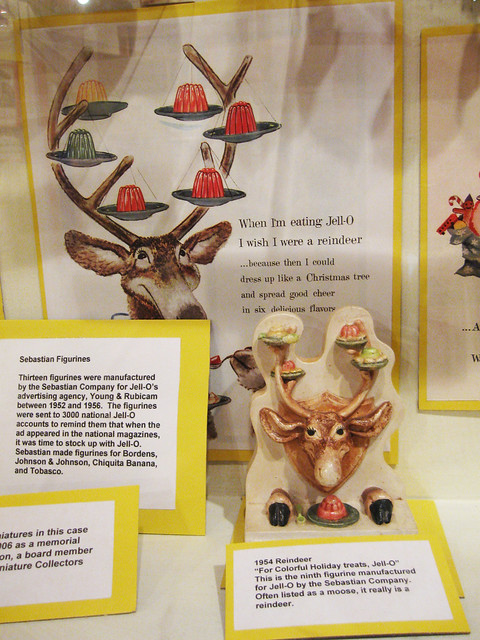
Then again, maybe Jell-O actually was at the center of American culture, because the Jell-O company thought it was a good idea to make these little figurines based on the ads that are pictured in the background.


I wish there had been a figurine for this ad, but I don't think they had it.


One of the best parts was a notebook where people could write down their stories about Jell-O. Ivan and I really liked this one:

"The year was 1982 and I had to come up with a model of a plant cell. Overnight, my sister and I made the model out of Lime Jell-O & mints & pieces of licorice. I told the class it was edible & my science teacher gave me a spoon and & told me to eat."

There was also this brief tale about Jell-O salesmen:

"As I recall, I was with the Jell-O company in 1915, and was on the last wagon that they had in operation. . . . The salesman was an ex circus man. He was delightfully tough and remarkable for his ability to wear a derby hat on the side of his head, even while eating, and for his knack of chewing tobacco and smoking a cigar at the same time. . . . We covered Ohio south of Columbus, hitting towns of 2500 and under. Most of them were under. We started in Xenia on Thanksgiving and worked through the winter, which was probably the ghastliest, coldest job that ever existed outside the trenches. . . . While driving through the country, we were supposed to tack up big canvas signs. This was a sporting proposition, as farmers were never much in favor of the idea. We were shot at several times by outraged natives but only once with any effectiveness. The bird shot was removed from the salesman at the next town, and the operation was charged up as a veterinary fee. (Repairs on horses were a legitimate expense--but not repairs on salesmen.) [Excerpts from "On the Wagon," by Sid Ward, General Foods Magazine, 1931.]

In addition to these strange and wonderful stories, they also had strange and wonderful old Jell-O flavors that have been discontinued. Did I say wonderful? I meant horrifying and revolting.


Arguably, the best part of the museum is when you turn a corner and suddenly you see this:


This is a giraffe. Why? WHY NOT.

It so happens that this giraffe was part of a visiting circus near LeRoy when it suddenly expired, and since Jell-O had had an ad campaign involving giraffes, the obvious solution as to what to do with the giraffe carcass was to stuff it and give it to the Jell-O museum. Possibly it was dissected first by the local doctor -- I might be mixing this up with a novel I read once, but it might also have happened for real with this giraffe. I am uncertain and in cases when facts are uncertain I report them anyway just in case they're true. This is known as responsible journalism.

With this, our visit to the museum came to the end.

BUT DID IT REALLY? NO IT DID NOT. It turns out that in the basement of the Jell-O museum is a small museum of transportation, and a collection of old medicaments that made me grateful that I was born no earlier than I was, for raccoons seem to be too much involved for my personal taste. Part two of our trip to what I am now referring to as the LeRoy Museum Complex will be covered in the next post. I will also quote at length from a moral poem about vanity and outdoor safety, so you won't want to miss THAT.

Monday, January 07, 2013

In the Conservation Lab


Some time in August, my co-worker in the library's conservation lab told me she was going to wash a book and asked if I was interested in watching. My jaw promptly fell off, indicating that yes, I was interested in that. I waited and waited and waited, and finally the day came: the day of the washing of the book. I cannot express how excited I was.

Book washing is both complicated and simple. Basically, you unbind a book, put the pages in a solution, let them sit, air-dry them, press-dry them, and re-bind them. But obviously there's more to it than that. My conservator friend said a lot of things about chemistry that went over my head, for example. The solution she used in this case was, I think, just ethyl alcohol, but sometimes it's more complicated than that. It has to do with what's in the paper and what's on the paper. Some inks do not agree with some chemicals, and terrible things can happen.

Nothing terrible happened to this book. It had very sturdy pages because its paper was made of rags. I learned a lot about paper-making, including the delightful fact that paper-making used to seriously injure and sometimes kill people. Paper used to be made by putting a kind of mesh screen in a vat of rag pulp and lifting it directly up so that the screen remained horizontal. As you can imagine, this would strain even very powerful shoulders after a while, and I was told that sometimes people would just pop. They'd give out. Their arms would just be destroyed. Sometimes the pressure it put on their muscles would kill them. Paper-making was serious business.

Rather remarkably, rag paper withstands water extremely well, and ink usually does, too. I was surprised how rough our conservator could be with them without harming them at all. Which is not to say that she wasn't extremely careful -- but she wasn't moving at a snail's pace and biting her lips like I would have been. The paper was practically as sturdy as cloth, although it would tear quite easily if you went with the grain.


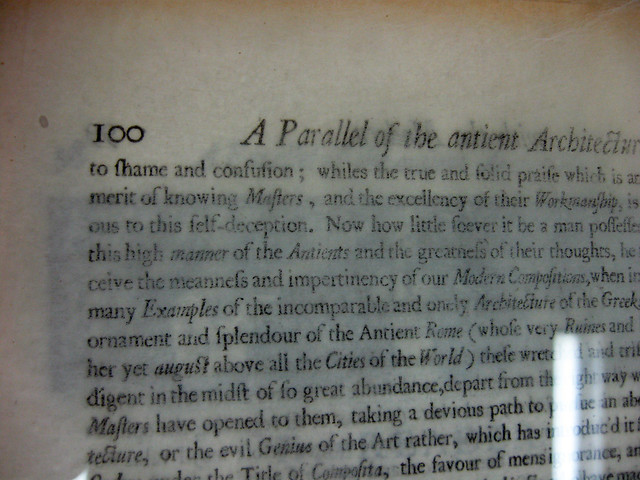
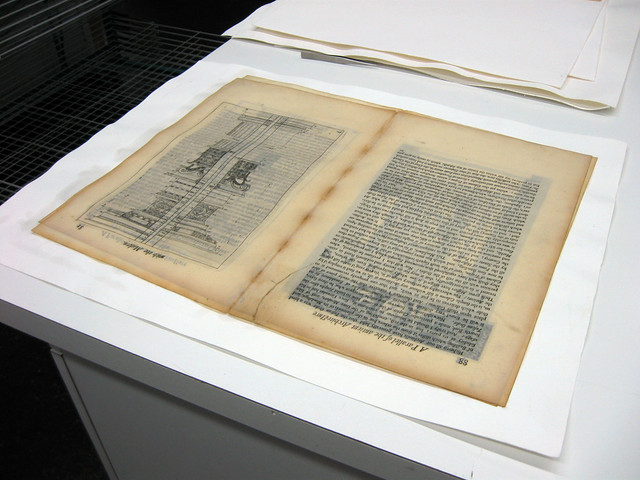
Check out those ligatures! omg!

But the paper does bond with itself and is difficult to separate if it touches in the water, so it's necessary to put a piece of this special kind of paper in between:


I wish I could be more specific than "special kind of paper," but it's very difficult to take photos and notes at the same time! This is what makes the ink in the above two images look gauzy and dreamlike - it's very thin and transparent when wet, but is enough to prevent the pages from bonding.

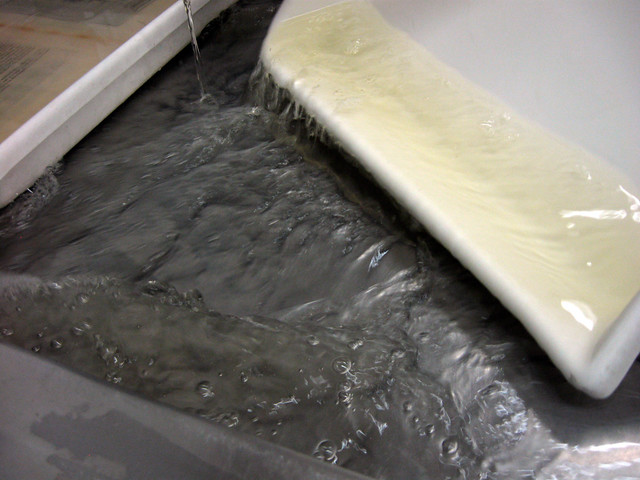
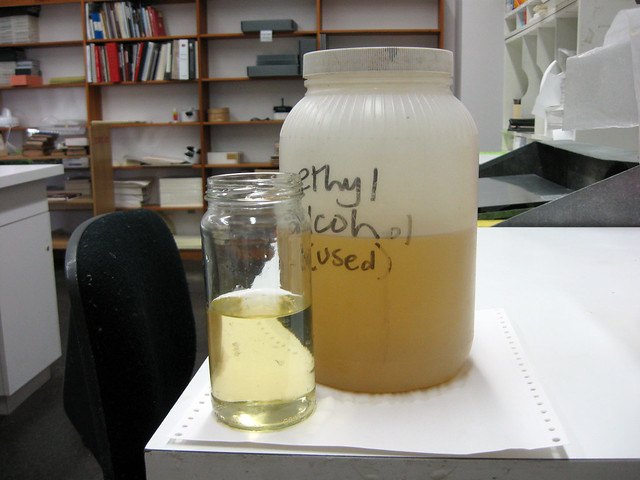
The book pages sit in these shallow vats for a while, making the water a yucky shade of yellow.


This book wasn't all that disgusting, but since the alcohol can be reused, you can see how dirty other pages have been.


When the pages have soaked long enough, they are laid flat on these absorbent sheets (which are also reused) and set in a drying rack. After this, they are dried in a press, but that's a delicate process. If you put too much pressure on the paper, you can lose things like the indent into the paper where you can see the edge of the printer's block. Which is the kind of thing that's terrifying and one reason I don't allow myself to be around precious objects. O the responsibility!

Once the pages are dry, they can either go back in their original binding (if it's in good condition or unique or important in some way) or into a new binding (if the old binding is not original, full of damaging acid, or too decrepit to save). I've seen some pretty incredible bindings in the conservation lab, including one our conservator did of a sixteenth-century book (if I'm recalling correctly) -- re-bound in snow-white pigskin.


It's pretty cool that we have a conservation lab in our library, and even cooler that our conservationist is so happy to talk about her work with fascinating underlings. She even puts up with me gasping and clutching my chest every time I learn a new and interesting fact, which is every two seconds. Next time I'll take better notes so that you can become as ridiculous as I am.

Sunday, January 06, 2013

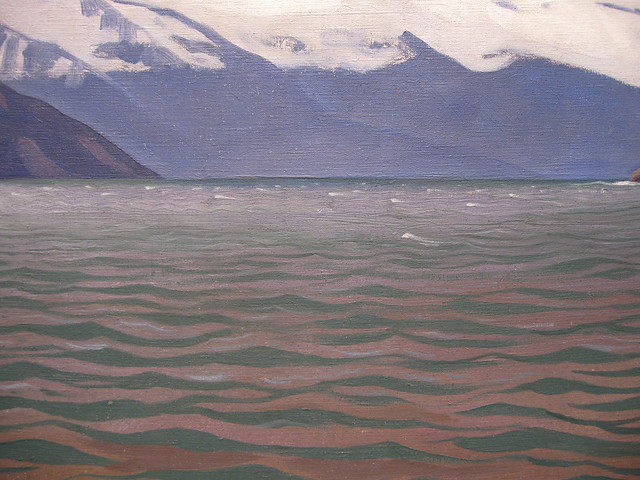
"Superb stalactites of a blue green color"

IMG_0359x
Detail from Rockwell Kent's Seascape (1933-35)

(I've set up weekly Monday posts through March, but I may post intermittently between them as things come up. This one is too wintry to post after March, when we're no longer getting serious snow. At least, I hope we won't be.)

I recently finished reading Andrea Wulf's Transit of Venus: The Race to Measure the Heavens, which was wonderful and fascinating. In 1761 and 1769, astronomers dispersed all over the world to see Venus cross the sun. They wanted to record how long it took in as many locations as possible so that they could use the differences between their observations to calculate the distance between the earth and the sun - something no one had been able to do before. Many astronomers traveled unimaginable distances and suffered pretty terribly in the name of science. Five of them even died. Jean-Baptiste Chappe d'Auteroche went all the way from Paris to California (which of course involved going all the way around Cape Horn), and set up his observatory where he landed even though there was an outbreak of typhus. There was no time for him to sail further on, and he refused to give up his mission, which he'd started nine months earlier. He was able to make his observation, but couldn't avoid getting the disease and died two months later. Only one person who came on the ship with him survived and managed to get his results back to other scientists. I may have gotten misty-eyed reading that part.

But the part I particularly wanted to share was this description of Anders Planman's trip to Kajana in eastern Finland to observe the transit of Venus in 1761, because of the rather incredible images of the frozen waves and the bursting trees:

"To reach Finland, he had to cross the frozen Gulf of Bothnia by sledge, but the severe winter had laid an unusually thick blanket of snow over Scandinavia. The whipping waves had congealed into a frosted picture, as if someone had snapped a finger to stop the world. In place of a smooth surface the Gulf of Bothnia was a treacherous icescape of 'superb stalactites of a blue green color'. Though stunningly beautiful, it made for dangerous travelling. Sledges had to follow hardened lines of the waves, regularly overturning when one side would suddenly be 'raised perpendicularly in the air'. Wrapped up in thick pelts, the passengers were often catapulted out of their sledges like furry cannonballs and the horses then galloped off, scared, as another traveller described, 'at the sight of what they supposed to be a bear or wolf rolling on the ice.'

"By the time Planman arrived in Abo on the Finnish side of the Gulf of Bothnia, he was so ill that he was forced to rest for three weeks until he recovered his strength. To make up for lost time, he then travelled day and night through lonely forests towards Kajana. There was a "dreary silence," other travellers remarked, the only noise the erratic choir of bursting bark which exploded with a bang when a tree's sap froze and expanded."

If this doesn't make you feel warmer in your house, no matter how leaky your windows are, read it again!